Architectural Importance of Sheikh Zayed Road Curve


Intro
Sheikh Zayed Road, a vital artery of Dubai, is not just any busy highway. It embodies the spirit of modern urban design, showcasing the city’s ambition and growth. Its most fascinating feature—the curve—holds architectural significance that goes beyond mere aesthetics.
This article will peel back the layers of this curve, considering its implications in urban planning, traffic flow, and overall aesthetic appeal. By understanding the choices that brought this design to life, the narrative spins a broader tale of how such features contribute to Dubai's identity as a rapidly evolving, cosmopolitan metropolis.
Moreover, insights into the current real estate trends along this road and future developments will serve those who wish to invest or understand the broader context of urban living in this vital area of the city. Ultimately, this exploration aims to provide a holistic understanding that fits into the larger narrative of Dubai's architectural journey.
Market Insights
Current Trends in Dubai Real Estate
Dubai's real estate market has seen a remarkable resurgence in recent years. Especially along Sheikh Zayed Road, opportunities abound for both residential living and commercial investments. There’s a noticeable shift towards mixed-use developments, harmonizing living and working spaces. The curve itself has sparked interest from developers looking to maximize not just visual impact but functional space as well. Prime properties in this area are becoming hot commodities, with demand continuing to outstrip availability.
Predictive Analysis of Future Developments
The trajectory of Sheikh Zayed Road's architectural evolution will certainly further shape Dubai’s skyline. Analysts predict that innovative designs will emerge, continuing to incorporate green spaces and sustainable practices. Furthermore, with Dubai’s focus on becoming a smart city, future developments might integrate advanced technologies into the housing and commercial sectors.
This adaptation to modern needs reflects broader urban planning strategies aimed at improving the quality of life and enhancing accessibility. These initiatives help not only solidify the area’s status but also ensure its adaptability in an ever-evolving urban landscape.
"The way a city looks, feels, and functions is increasingly intertwined with how well its architecture meets its people's needs."
In summary, the real estate landscape along the curve of Sheikh Zayed Road is not just about property; it reflects a commitment to progressive urban living. Potential investors and current residents need to keep a close watch on these trends to capture the wealth of opportunities ahead.
Preamble to Sheikh Zayed Road
Sheikh Zayed Road, often considered the backbone of Dubai's bustling urban landscape, offers much more than just a thoroughfare. Its significance extends beyond mere transportation; the road serves as a critical artery connecting various parts of the city while harmonizing with the unique architectural vision that defines modern Dubai. The curve along this road is not merely a design choice; it holds architectural significance that reflects the fast-paced evolution of urban development in Dubai. Understanding this stretch of road provides insights into Dubai's values and future, benefiting investors, homeowners, and realtors alike.
Historical Context
Sheikh Zayed Road wasn't always the monumental route that it is today. When it was first laid out, Dubai was a modest port town, much different from the global hub it represents now. The development of this road, originally known as Dubai – Abu Dhabi Road, began in the early 1980s to facilitate transportation shifts induced by the rapid growth of the emirate. It has undergone several transformations since those early days, with critical milestones marking its journey—such as the incorporation of more diverse architectural styles and technologies.
Influences from international architectural movements can be seen in the overall design of buildings along the road. This open avenue was pivotal for inviting foreign investments and tourism, essential components in establishing Dubai as a modern city. The road's historical development showcases the adaptability of the region, reflecting a willingness to innovate and embrace change.
"The evolution of Sheikh Zayed Road mirrors the aspirations of Dubai itself—always looking to the horizon, always ready for the next leap forward."
Significance in Dubai's Urban Landscape
Within Dubai's urban fabric, Sheikh Zayed Road stands as a symbol of architectural prowess and ambitious planning. This essential route serves as a visual and functional axis, linking key districts like Downtown Dubai, Dubai Marina, and the Jebel Ali Free Zone. Its significance lies in its ability to facilitate not just vehicular traffic but also to enhance the aesthetic appeal of the city.
The curve on Sheikh Zayed Road is remarkable. It strategically shifts the perspective of the buildings along the thoroughfare. As vehicles navigate this bend, there is a gradual reveal of skyscrapers and architectural masterpieces that punctuate the skyline—like the iconic Burj Khalifa and the stunning Emirates Towers. This thoughtful planning enriches the user experience, allowing one to appreciate the architectural beauty gradually rather than overwhelming them with immediate views.
Additionally, the road's design facilitates urban cohesion by accommodating pedestrian walkways and green spaces that soften the hard edges of concrete. As a result, it becomes not just a transit route, but a dynamic living space dedicated to the residents and visitors of Dubai. Surrounded by a mix of commercial, residential, and recreational spaces, the curve on Sheikh Zayed Road encapsulates the essence of a forward-thinking metropolis—one that values both architectural ingenuity and livability.
Understanding the Curve
The curve on Sheikh Zayed Road is more than just a directional change in the roadway; it's a pivotal element that influences various aspects of urban life in Dubai. This section will explore its intricate design features and the engineering considerations that go into such a structure. Understanding these elements is vital for various stakeholders—urban planners, real estate developers, and even everyday commuters—because this curve functions as both a functional route and a significant landmark of the city.
Design Features
The allure of the curve lies in its striking design, which merges aesthetic appeal with practical functionalities. It plays a critical role in shaping the visual narrative of Sheikh Zayed Road. The curvature, rather than being a mere bend, is a deliberate artistic choice that aligns with Dubai's ethos of innovation and grandeur.
Key aspects include:
- Visual Flow: The curve enhances the scenic views of surrounding skyscrapers and trees, creating a picturesque experience for those traveling along the road. This not only beautifies transportation but also emphasizes the architectural splendor that Dubai is known for.
- Landmark Identity: Structurally speaking, the curve adds to the identity of Sheikh Zayed Road. Buildings alongside feature unique angles and lines that complement the bend, making the area visually distinct and easily recognizable.
- Influence on Architecture: This design style pushes buildings to adapt more creatively to their environment, leading to innovative architecture that’s coherent with the curvature.
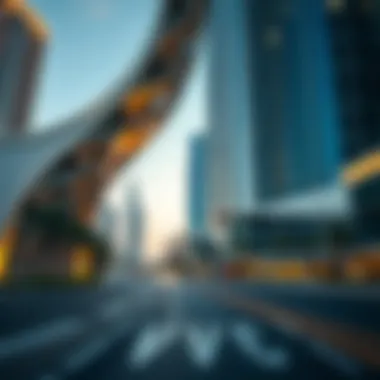
To illustrate, let’s consider the iconic Burj Khalifa. Positioned near the curve, its towering presence is accentuated by the road’s design. As vehicles navigate the bend, sightlines are carefully orchestrated to provide a glimpse of this marvel while making the journey engaging.
Engineering Considerations
From an engineering standpoint, the curve presents a unique set of challenges and benefits. Stability, safety, and traffic management are core tenets around which the engineering is anchored. Engineers must conduct a series of meticulous calculations to ensure that the curve accommodates the high volume of traffic that characterizes Sheikh Zayed Road.
Factors of Engineering Include:
- Gradient and Superelevation: The angle of the curve is not arbitrary. Engineers have to determine the optimal superelevation, which is the banking of the roadway to counteract the centrifugal force experienced by vehicles. This keeps the vehicles stable, minimizing the risk of accidents.
- Materials and Durability: Choosing the right materials for both the roadway and surrounding structures is crucial. Materials must withstand harsh environmental factors like high temperatures and sand erosion to maintain safety and aesthetics over time.
- Traffic Flow Modeling: An integral part of the design process, advanced modeling techniques are employed to understand traffic patterns. This allows for predictions on congestion and informs adjustments that may need to be made on the design.
The engineering behind the curve is a testament to Dubai's commitment to blending functionality with visionary design, making it an integral corridor in the heart of the city.
In summary, the design features and engineering considerations of the curve on Sheikh Zayed Road work in tandem to enhance not only travel but also the visual identity of Dubai as a thriving metropolis. This amalgamation of beauty and engineering precision ensures that the roadway remains a critical asset for urban development, inviting further exploration into its multifaceted impact.
Impact on Traffic Flow
Understanding how the curve of Sheikh Zayed Road affects traffic flow is integral to grasping its broader significance to Dubai's urban ecosystem. This road, renowned for its dramatic bend, not only serves as a vital artery for the city—connecting areas from the bustling Downtown to the horizons of the Expo 2020 site—but also presents unique challenges and advantages when it comes to managing the heavy vehicular movement typical in this fast-paced metropolis.
An efficient traffic flow is paramount in any urban setting, especially in a city where time is often equated with money. The curve, while aesthetically pleasing, plays a significant role in influencing vehicular speed, driver behavior, and ultimately, accident rates. Understanding these elements can help urban planners refine strategies to optimize this critical stretch of roadway.
Traffic Management Strategies
Effective management of traffic flow, especially in high-traffic areas, largely hinges on strategic planning and execution. Here are some approaches that have been adopted:
- Smart Traffic Signals: Sensor-based systems adjust signal timings in real-time based on traffic conditions. This ensures a streamlined flow, reducing stop-and-go situations, particularly at junctions that align with the curve of the road.
- Clear Signage and Lane Markings: Properly placed signs indicating speed limits and lane usage significantly aid in navigating tricky turns. This reduces the likelihood of sudden lane changes, which are often a recipe for accidents.
- Dedicated Lanes for Buses and Taxis: The introduction of dedicated lanes for public transport enhances fluidity for mass transit and reduces congestion for private vehicles. In a city like Dubai where public transport is critical, these strategies help ease pressure on the main lanes.
- Regular Traffic Flow Studies: Local authorities undertake periodic assessments to identify congested times and problem areas, allowing for dynamic adjustments to strategy. For instance, if certain hours see increased congestion along the curve, special traffic measures can be taken during those periods.
Challenges Faced
While the curve presents certain aesthetic and functional advantages, it's not without its own set of challenges:
- Accident Rates: The curvature can create blind spots, leading to unexpected car collisions. Continuous monitoring and subsequent adjustment of traffic strategies are paramount to mitigate this risk.
- Driver Behavior: Not all drivers are accustomed to navigating such curves, often causing erratic lane changes or speeding. Educational campaigns focusing on safe driving behaviors can help combat this issue.
- Infrastructure Aging: As one of the original features of this major roadway, wear and tear can lead to potholes or damage that exacerbate driving difficulties, requiring consistent maintenance to ensure safety.
- Traffic Volume Variability: Frantic city growth fuels fluctuations in vehicle volume. Handling peak times effectively often requires flexible management strategies that adapt to changing patterns in real-time.
In summary, while the curve on Sheikh Zayed Road enhances both the beauty and functionality of the urban landscape, it simultaneously complicates traffic management, necessitating innovative strategies to overcome these hurdles. Understanding these dynamics paves the way for a safer, more organized transportation network in Dubai.
The challenge lies not just in addressing the current traffic issues but in anticipating future growth and adjusting strategies accordingly.
Further reading and resources can be found at Wikipedia, Britannica, and various city planning reports available on gov.ae.
Aesthetic Contributions
The curve along Sheikh Zayed Road is not merely a feature of infrastructure; it’s a significant architectural character that intricately weaves through Dubai's urban narrative. The aesthetic contributions of this curve have far-reaching implications for the city’s identity, fostering a sense of place and visual harmony that complements surrounding structures. A pivotal element, the curve shapes not only the driving experience but also the experience of every observer looking from vantage points across the area.
Integration with Surrounding Architecture
As the curve of Sheikh Zayed Road flows into the cityscape, it engages with an array of architectural styles, creating a symphony of forms and structures. Iconic skyscrapers such as the Burj Khalifa and the Emirates Towers stand tall, their sleek lines contrasting with the soft yet commanding curve of the road. This interplay between the natural form of the road and the geometrical precision of modern buildings creates an inviting atmosphere.
The visual transition from straight lines to curves softens the harshness of urban design, leading the eye smoothly through the city. It enhances the overall architectural appeal, steering away from a rigid grid layout, which can often feel too confining. Municipal policies and the vision of city planners consciously took this aesthetic into consideration, ensuring that private developments along the road must align harmoniously with these curves. This has nurtured an environment where each building offers something to the road’s sensory experience, from reflective glass facades to vibrant landscaping.
"The integration of architectural elements with the road’s curve grants a more organic feel to the urban stretch, unifying disparate designs into a cohesive visual narrative."
The curve encourages developers to think creatively, often resulting in innovative structures that stand out yet cohesively blend in with their surroundings. Examples include the twisting form of the Cactus Tower and the flowing silhouette of the Dubai Marina residential complex. Each architecture piece tells its own story while contributing to the larger tapestry of the urban environment.
Visual Landmarks
The curve serves not just as a path for vehicles but also as a showcase for visual landmarks that punctuate the Dubai skyline. Notable structures such as the Dubai Frame and the Museum of the Future stand as icons, visible from various points along the road. Their strategic placement and design accentuate the curve, drawing the eye and creating memorable visuals that have become synonymous with the city's image.
These landmarks do more than enhance aesthetic appeal; they serve as navigational aids and cultural symbols that resonate with residents and tourists alike. People recognize these structures from photographs and social media, often associating them with key milestones in their Dubai experiences. Thus, they transform a simple road into a cultural corridor, steeped in significance and community pride.
End
In essence, the aesthetic contributions of the curve on Sheikh Zayed Road translate into a dynamic urban experience that both dazzles and invites contemplation. By harmonizing with surrounding architecture and creating identifiable landmarks, this curve is a testament to thoughtful design and forward-thinking urban planning that enhances Dubai's worldview.
Cultural Significance
The curve on Sheikh Zayed Road is not merely a feature of civil engineering; it is a symbol that encapsulates the spirit of Dubai itself. As a bustling artery within one of the world's most dynamic cities, it represents an intersection of culture, innovation, and identity. The design and construction of the curve reflect a desire to harmonize modernity with local traditions, offering a tangible link between the past and the present.
Symbolism of the Curve
The curve signifies much more than traffic flow. It embodies the ambition and vision of a city that continues to rise from the desert. Just as Dubai's skyline has transformed dramatically over the past few decades, so too has the road evolved, aligning perfectly with the city's forward-thinking ethos.
This bend in the road can be seen as a metaphor for the journey of Dubai itself—a city that has adapted and transformed over time. The curvature symbolizes flexibility and openness to change, qualities that are essential for growth. The road serves as a canvas on which Dubai paints its aspirations, connecting iconic landmarks and fostering an urban narrative that resonates with both residents and visitors.
"This curve serves as a reminder of the journey. It whispers to us to embrace change and look ahead, no matter how dramatic it may seem."
Influence on Local Identity
The architectural choices made along this stretch of Sheikh Zayed Road have helped to forge a unique local identity. As citizens and expatriates navigate these roads daily, they encounter cultural markers that bind them together. The curve influences not just transportation, but also social interactions, fostering connections between diverse communities.
Key aspects contributing to this influence include:
- Cultural Landmarks: Buildings and structures that line the road serve as cultural landmarks, embodying narratives that reflect Dubai’s diverse society.
- Events and Gatherings: This section of the roadway becomes a stage for public events, festivals, and gatherings, reinforcing the social dimensions of the area.
- Art Installations: The inclusion of public art showcases local artistic talent and enhances cultural enriching elements that benefit the entire community.
In many ways, the curve on Sheikh Zayed Road stands as a testament to unity and resilience. It mirrors the diverse tapestry of Dubai's population, encouraging a profound sense of belonging and identity amongst its inhabitants. Each time one travels this route, they are reminded of their role in the city’s larger narrative, reflecting a shared commitment to progress while respecting tradition.
Urban Planning Context
An understanding of urban planning context is pivotal when discussing the curve on Sheikh Zayed Road. This section delves into how the design and integration of this curve impact urban development, zoning, and the growth of the surrounding community in Dubai. The significance of the curve extends beyond mere aesthetics, bringing various benefits and considerations that should not be overlooked.
Zoning Regulations
Zoning regulations in Dubai have always been crucial in dictating the architectural landscape along major thoroughfares like Sheikh Zayed Road. The curve itself is a remarkable example of how zoning can enable flexibility in urban design while ensuring public safety and access. This unique road segment was designed considering the regulations that govern not just traffic flow but also the types of buildings and developments that can exist nearby.
To put it plainly, zoning laws help maintain a balance between the commercial and residential opportunities around Sheikh Zayed Road. They ensure that developments align with broader urban objectives such as sustainability, density, and functionality. For instance, areas adjacent to the curve often exhibit mixed-use developments which incorporate retail, office spaces, and residential units, enhancing the vibrancy of the locality.
Some key elements of the zoning regulations include:
- Height restrictions for buildings adjacent to the curve to preserve views and accommodate sunlight.
- Setback requirements that dictate how far buildings must be from the road, thus enhancing pedestrian safety and access.
- Land use designations that specify what types of constructions—commercial, residential, or industrial—are allowed around the curve, fostering a cohesive urban environment.
Future Development Initiatives
Looking ahead, the potential for future developments along Sheikh Zayed Road, particularly at the curve, is continually evolving. Urban planners and developers are exploring innovative initiatives that align with Dubai’s vision of becoming a future-ready city. There’s a push to make the area not just a transit route but a vibrant urban center that supports an active lifestyle.
A few noteworthy initiatives include:
- Smart infrastructure projects aimed at enhancing connectivity and integrating technology within transport systems. These developments could significantly improve the journey along the curve, making it more efficient both for motorists and pedestrians.
- Green spaces are being considered to counteract urban heat and improve livability. Parks or recreational areas alongside the curve could also serve to beautify the environment and provide leisure opportunities for residents and visitors alike.
- Promoting transit-oriented developments, which emphasize proximity to public transport stations. This strategy is likely to increase economic activity and encourage a shift towards more sustainable commuting options.
"Urban planning is not just about building; it’s about creating a cohesive fabric where people can live, work, and thrive—all the while respecting the natural environment."
For more in-depth information on Dubai's zoning laws, refer to Dubai Municipality. Further insights can also be gleaned from articles on Wikipedia, which cover various aspects of urban planning in the UAE.
Environmental Considerations
The architectural design of the curve on Sheikh Zayed Road extends beyond mere aesthetics—it plays a vital role in environmental considerations that ensure the sustainability of Dubai's urban landscape. In a rapidly urbanizing area, the interrelation between architecture and the environment is crucial. By examining this curved structure through an environmental lens, we gain insight into how it not only addresses immediate needs but also mitigates broader ecological impacts.
Sustainability Measures
Sustainability is a cornerstone principle in contemporary architecture, and Sheikh Zayed Road’s curve is no exception. The design incorporates various sustainability measures that reflect a commitment to ecological balance while accommodating urban growth. Key elements include:
- Green Landscaping: Strategically placed greenery alongside the road not only beautifies the area but also improves air quality. Landscaping using indigenous plants reduces water consumption while fostering local biodiversity.
- Rainwater Harvesting: Systems integrated into the road design channel rainwater towards designated areas for absorption. This contributes to groundwater replenishment, minimizing runoff and potential flooding.
- Energy-Efficient Lighting: The use of solar-powered streetlights further enhances the sustainability aspect. These not only reduce electricity consumption but also showcase Dubai’s commitment to harnessing renewable energy sources.
Such measures present a dual benefit—while they serve environmental purposes, they also align with Dubai’s vision of creating a greener urban environment, making it appealing for investors who prioritize sustainable developments.
Impact on Local Ecosystem
The physical curve of Sheikh Zayed Road has a distinct impact on the local ecosystem that warrants examination. Understanding this relationship helps to shape future urban planning initiatives.
- Fauna and Flora: The presence of green belts alongside the road fosters habitats for various species of birds and small animals, promoting biodiversity in an otherwise concrete jungle. For instance, the curving pathways allow wildlife to navigate more freely without being obstructed by hard barriers.
- Microclimate Effects: The design of the road can influence local temperature and humidity levels. Trees and plants help in regulating temperatures by providing shade and releasing moisture into the air, an important factor in the desert climate of Dubai.
- Pollution Control: By absorbing particulate matter and carbon dioxide, the vegetation acts as a natural air filter. This is crucial in an area of high vehicular traffic, where pollution is a significant concern.
"The curve represents not only a structural feature but also a proactive approach to preserving Dubai’s ecological fabric amid growth."
In essence, the architectural curve on Sheikh Zayed Road reflects a thoughtful interplay between urban development and environmental stewardship. It is a testament to the ongoing effort to create a balance where infrastructure and nature coexist harmoniously for the greater good of the city. This dual focus serves as a template for future projects and sets a precedent that can encourage investors and residents alike to support initiatives that cater to both growth and ecology.
Public Perception and Feedback
Public perception plays a pivotal role in shaping architectural projects, especially landmark roadways like the curve on Sheikh Zayed Road. Understanding how this structure affects the community's daily experience can offer insights into its broader significance. Feedback from residents, commuters, and visitors reflects their interactions with the space, shaping various aspects of urban planning and design. This feedback is not simply about aesthetics; it also encompasses functionality, safety, and overall satisfaction. The perception of the curve influences ongoing and future urban initiatives, ensuring that developments align with community needs and aspirations.
Community Engagement
Engaging the community in discussions about the curve has proven essential to its ongoing success. Local forums, town hall meetings, and digital platforms have facilitated dialogue among residents and stakeholders. Many citizens have expressed their opinions on how the curve influences traffic flow, noise levels, and nearby amenities. This venue for feedback fosters a sense of ownership over the space. Here are key aspects of community engagement:
- Local Involvement: Residents often share their experiences using the road, providing invaluable insights into its daily impact.
- Collaborative Initiatives: Workshops and public forums invite suggestions and ideas from citizens on potential improvements and future developments.
- Feedback Implementation: When community suggestions make their way into planning, it fosters goodwill and strengthens trust between city planners and residents.
Establishing clear lines of communication creates a feedback loop that is beneficial for all parties.
Surveys and Public Opinions
Surveys are a powerful tool to gauge public sentiment regarding the curve on Sheikh Zayed Road. By conducting systematic surveys, city planners and local authorities can glean quantitative and qualitative data on how people perceive the curve's design, safety features, and aesthetic value. A range of points emerges from these surveys:
- User Experience: Survey responses reveal how comfortable users feel while driving or walking along the roadway.
- Safety Concerns: Public opinion often highlights specific areas of concern, such as visibility and traffic patterns, helping planners address these issues.
- Visual Appeal: Responses can reflect diverse perspectives on the blend of modern design and natural landscape features surrounding the curve.
“Public sentiment can either bolster infrastructure projects or bring them to a standstill. Understanding this is crucial in any urban development.”
These surveys serve not only as a barometer of public sentiment but also as a crucial element in informed decision-making. Keeping the community in the loop through structured feedback avenues ensures the curve can evolve in ways that truly meet the needs of its users.
Ending and Future Outlook
In today’s rapidly changing urban landscapes, the architectural significance of infrastructural elements such as the curve on Sheikh Zayed Road envelopes profound implications for both the cities they inhabit and the people who navigate them. Understanding how this specific design choice integrates within the broader urban planning framework not only highlights its aesthetic contributions but also underlines its functional necessity in enhancing mobility and connectivity across Dubai.
Summary of Findings
This exploration revealed several key insights:
- Architectural Integration: The curve on Sheikh Zayed Road showcases an intentional blend of functionality and aesthetics, contributing to a more dynamic urban environment.
- Traffic Management: Insightful traffic management strategies have been employed to mitigate congestion, primarily due to the unique shape of the road.
- Cultural Landmarks: The curve acts as a pivotal point of reference for locals and tourists alike, influencing perceptions of space and place in Dubai’s vibrant tapestry.
- Community Engagement: Continuous feedback and community involvement have shaped enhancements to the road’s design and function, illustrating a responsive approach to public transport needs.
Overall, the curve is more than just a physical feature; it encapsulates Dubai's evolving identity as a metropolis while catering to practical considerations, ensuring a smooth flow of movement amid its urban sprawl.
Long-Term Implications
Looking ahead, the implications of the Sheikh Zayed Road curve stretch far beyond its immediate aesthetic appeal or traffic function. Given the anticipated growth of Dubai and its surrounding areas, several long-term considerations emerge:
- Sustainable Development: Future urban planning can capitalize on the insights drawn from the performance of the curve, promoting the incorporation of additional sustainability measures to minimize ecological footprints and enhance the local atmosphere.
- Enhanced Transportation Networks: Given the increasing demands on infrastructure due to population growth, the integration of advanced transportation technologies could be facilitated, potentially reducing travel times and improving connectivity.
- Cultural Preservation: As Dubai continues to grow, maintaining the cultural significance tied to structural features like the curve will be vital. Responsively integrating design changes while honoring the past can foster a deeper connection between residents and their city.
- Economic Vitality: By enhancing the roadway's aesthetic and efficacy, the area can attract further investments. Both residential and commercial sectors may see a benefit in property values, anchored by the allure of surrounding landmarks and conveniences associated with the road.
In summary, the curve on Sheikh Zayed Road is not simply a functional component of Dubai's infrastructure; it is a robust part of the city’s identity that will have lasting effects on future urban planning, community engagement, and economic growth. The road's continued evolution will be a critical element in shaping the urban narrative of this dynamic metropolis.